About Terence McKenna
Ethnobotanist, psychonaut, and philosopher — the life and ideas behind the archive.
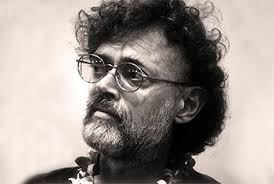
Terence Kemp McKenna (November 16, 1946 – April 3, 2000) was an American ethnobotanist, author, and lecturer who spent his life advocating for the responsible use of naturally occurring psychedelic plants — and, more than that, for a radical re-imagining of what it means to be human. He spoke and wrote about shamanism, language, culture, technology, the origins of consciousness, and the fate of the planet, weaving science, mysticism, and humor into a voice unlike any other. He was called the "Timothy Leary of the 1990s," but that comparison never quite fit. Where Leary was a provocateur, McKenna was a cartographer — mapping the far shores of the mind and bringing back reports that challenged the very foundations of Western thought.
The Spark in the High Plains
The journey began not in a university or a laboratory, but in the stark, fossil-strewn landscapes of Paonia, Colorado, where he was born in 1946. The young McKenna was not just a boy collecting butterflies; he was an ontologist in training, conducting a dialogue with deep time. The fossilized ammonites and ancient bones were his first teachers, whispering of immense, geological timescales that dwarfed the petty concerns of human history. This early immersion in the "long now" cultivated a perspective that refused to be confined by the narrow bandwidth of consensus reality.
In high school his family moved to Los Altos, California, and in 1965 he enrolled at the University of California, Berkeley, where he studied history and joined the experimental Tussman College. Berkeley in the mid-1960s was a crucible of cultural revolution, and McKenna absorbed it all — but he was never content to be a passive student. He traveled widely through Asia, Europe, and South America, and eventually completed a self-tailored degree in ecology, resource conservation, and shamanism — a field of study he essentially invented for himself.
The Alchemical Journey to La Chorrera
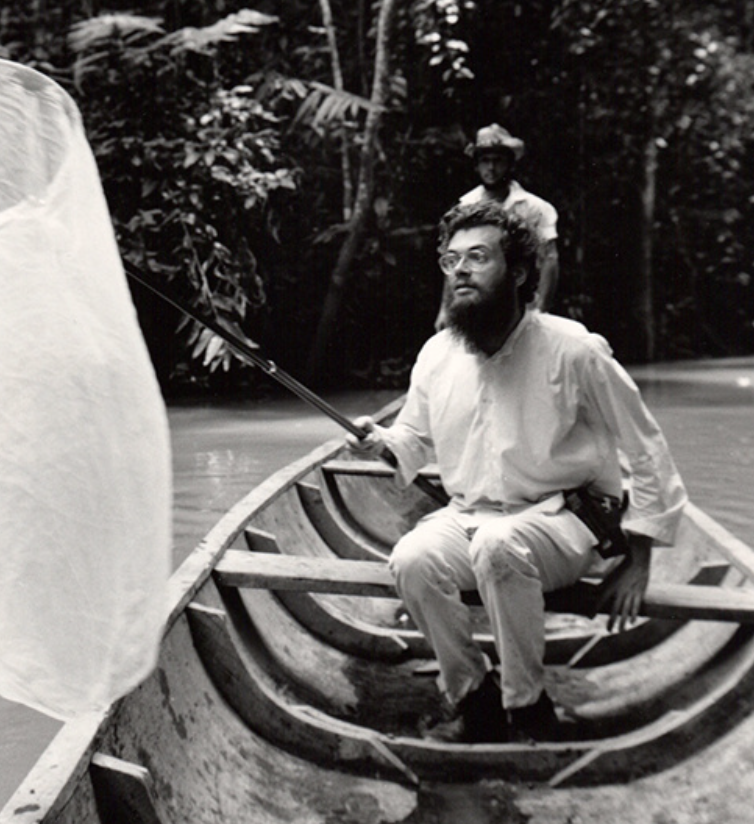
In 1970, the death of his mother from cancer sent McKenna into a period of profound reflection. The following year, he and his brother Dennis — along with three friends — traveled to the Colombian Amazon in search of oo-koo-hé, a plant preparation containing the powerful psychedelic compound DMT. What they found instead changed the course of their lives: fields of enormous Psilocybe cubensis mushrooms, a species that would become the new focus of the expedition.
At La Chorrera, at Dennis's urging, Terence became the subject of a remarkable experiment. On March 4, 1971, the brothers consumed high doses of the mushrooms along with a decoction of Banisteriopsis caapi — the ayahuasca vine — with the intention of, in Dennis's later words, "building a hyper-dimensional vehicle out of the 4D transformation of my own DNA." What Terence experienced there he described as a direct encounter with an alien intelligence, a "Logos" that spoke in a language of pure, downloaded psychedelic vision. This was the "Experiment at La Chorrera," an alchemical fusion of human curiosity and vegetable gnosis that would set the course for the rest of his life.
The Invisible Landscape
After returning from the Amazon, McKenna completed his degree at Berkeley in 1975 and, with Dennis, published The Invisible Landscape: Mind, Hallucinogens and the I Ching — a dense, speculative work that fused the brothers' Amazon experiences with the ancient Chinese divination system. It was an audacious attempt to build a bridge between the psychedelic experience and a mathematical model of reality, and it announced the arrival of a singular new voice.
Around the same time, the brothers co-authored Psilocybin: Magic Mushroom Grower's Guide (1976), a practical manual that helped spark a generation of home cultivation. Terence also began lecturing around Berkeley and appearing on underground radio, honing the extraordinary oratorical style that would become his signature. He made his living for a time as a professional butterfly collector and a dealer in Asian art — fitting trades for a man who saw the natural world and the world of ideas as one continuous landscape.
The Stoned Ape Hypothesis
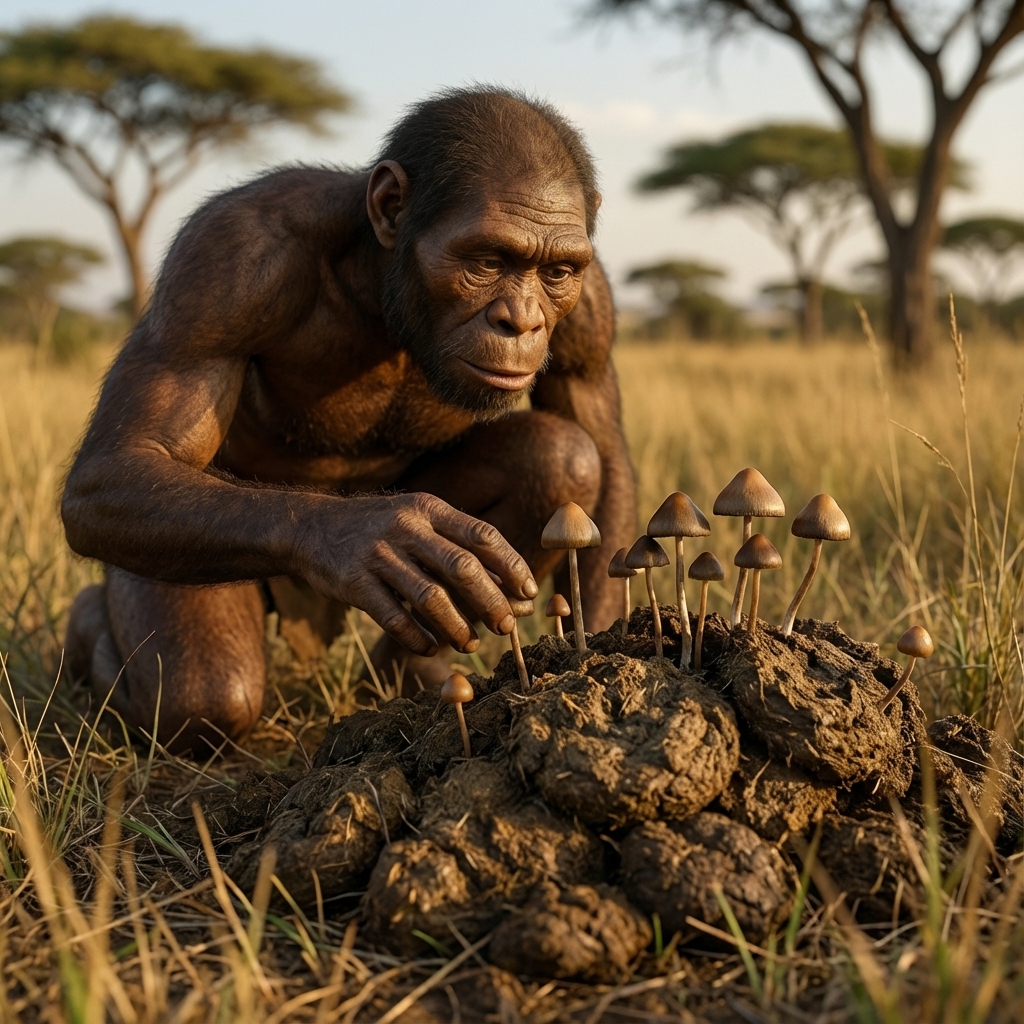
From his journeys, McKenna brought back more than just stories; he brought back models of the cosmos. His most audacious was the "Stoned Ape Hypothesis," a theory so elegant and disruptive it sent ripples through the halls of orthodox anthropology. What if, he asked, a mushroom catalyzed the birth of the human mind? What if a chance encounter with psilocybin on the African plains doubled synaptic connectivity, sparked the genesis of language, and lit the fuse of self-reflection? He proposed that early hominids, foraging in the grasslands, discovered psychedelic mushrooms that sharpened visual acuity, enhanced social bonding, and — crucially — accelerated the development of language and culture. It was a provocative, unprovable, and endlessly generative idea, one that continues to inspire debate in anthropology and neuroscience to this day.
Novelty Theory and the Timewave
Then there was "Novelty Theory" and the Timewave — his attempt to create a mathematical map of the universe's "ingression into the bizarre." Drawing on fractal patterns he claimed to have discovered in the I Ching, he charted the ebb and flow of novelty through history, all leading toward a point of infinite complexity he called the "Transcendental Object at the End of Time." His suggestion that this convergence might coincide with the end of the Maya calendar in 2012 became one of the most widely discussed — and widely misunderstood — ideas of the era. Scientists generally regard novelty theory as pseudoscience, and McKenna himself was characteristically playful about its status, insisting that he was offering a tool for thought rather than a settled truth.
The Archaic Revival and the Earth
At the heart of McKenna's vision was a deep concern for the planet. He believed that modern civilization had become dangerously disconnected from nature, and he called for an "archaic revival" — a return to the animistic, ecologically attuned modes of thought that our ancestors once possessed. He argued that psychedelic plants were keys to recovering this ancestral wisdom, and that only by reconnecting with the living intelligence of the Earth could humanity confront its mounting environmental crises.
This was not mere nostalgia. McKenna was a working ethnobotanist who, from his home base in Hawaii, co-founded Botanical Dimensions, a nonprofit organization dedicated to the study and preservation of ethnomedical and sacred plants, including a gene bank of rare species. He saw the loss of biodiversity and the degradation of the natural world as spiritual as well as ecological catastrophes — and he spoke about climate and the fate of the Earth with an urgency that feels startlingly contemporary.
The Tools of Navigation
For McKenna, psychedelics were the sophisticated navigational tools required for these explorations. They were not drugs in the conventional sense, but "vegetable teachers" and "entheogenic sacraments." He saw psilocybin as "the Logos," an alien intelligence, a talkative other that one could enter into a dialogue with. Ayahuasca was an immersion into the vibrant, living library of the planet's DNA. He championed these tools as birthrights, keys to unlocking the full spectrum of human potential and re-establishing our lost connection to the living, breathing intelligence of nature.
Yet he was also strikingly responsible about the risks. "Drugs are heavy equipment and you have to learn how to operate heavy equipment," he said. "We have driver's education; we should teach people how to operate drugs." He was clear that psychedelics were not for everyone — not for the immature or the mentally ill — and he advocated for their careful, intentional, and respectful use.
The Voice of the Archive
McKenna's lectures were not academic dissertations; they were acts of intellectual shamanism. With a trickster's grin and a spellbinding command of language, he would stand before audiences and, in a matter of hours, elegantly dismantle consensus reality, replacing it with a universe far stranger, more intelligent, and more alive than they had ever been led to believe. He was a fixture of the early-1990s rave scene, appearing at all-night dance clubs and multimedia events like Alien Dreamtime, where his spoken word became the soundtrack to a new kind of collective experience.
Hundreds of hours of his public lectures were recorded — professionally and bootlegged alike — and have circulated for decades on cassette, CD, and MP3. His voice has been sampled by countless musicians and DJs, and his ideas have seeded an entire generation of thinkers, artists, and scientists. It is precisely this body of recorded work that this archive exists to preserve.
His Books
The Legacy
Terence McKenna died on April 3, 2000, at the age of 53, after a long battle with the aggressive brain cancer glioblastoma multiforme. He passed away at a friend's home in San Rafael, California, surrounded by the love of his family — his children, Finn and Klea, his brother Dennis, and his longtime partner. His death was a profound loss to the global community of seekers he had helped to awaken.
But his ideas, like mushroom spores, have proven resilient and far-reaching. In the decades since his passing, the psychedelic renaissance he helped to ignite has moved from the margins into the mainstream — with clinical trials, scientific research, and cultural acceptance that would have seemed impossible in his lifetime. His books remain in print, his lectures continue to find new audiences, and his voice echoes through the work of a new generation of thinkers.
His legacy is not a set of beliefs to be adopted, but a methodology to be employed: Question authority. Trust direct experience. Explore the depths of your own mind. Articulate your findings with courage and precision. The informational DNA he cast into the world has found a new substrate in the digital realm — and this archive is a doorway into it, preserving his recorded words for anyone who wants to listen.